




I usually judge an entertainment app by what happens after the novelty wears off. Quinn - Audio Stories caught my attention because it is built around listening rather than watching, which makes it easier to fit into a busy home. I can imagine one person using it quietly before bed, another listening while doing chores, or a household taking turns with a device without needing a screen in the middle of the activity. That flexibility is the strongest reason I would suggest trying it.
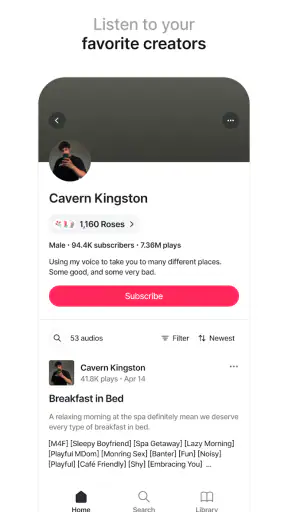
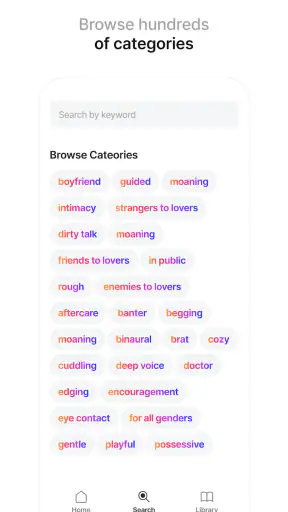
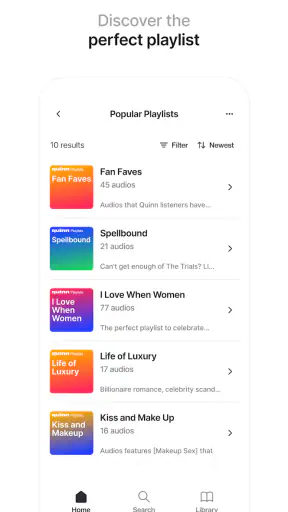
Quinn is a free entertainment app from QUINN INC. focused on audio stories and guided sessions. It is intended for mature listeners, so I would not treat it as a general family app or hand it to younger users without thinking about the context first. The app has reached over a million installs and holds a 4.7 average from around five thousand ratings, which suggests that its central listening experience works well for many people. My own view is more measured: it is appealing when you want private, voice-led entertainment, but it is not automatically suitable for every shared device or every member of a household.
How Quinn fits into a shared household
The most practical way to use Quinn at home is to treat it as an individual listening space, even when the phone or tablet is shared. Audio feels less intrusive than video, but it is still personal. A story that suits one adult may be awkward for someone else to hear unexpectedly in the kitchen, living room, or car. I would therefore start sessions with headphones when other people are nearby, especially because the mature age rating is an important part of deciding where and when the app is used.
A realistic example is a couple sharing a tablet. One person may open Quinn for a guided session while the other is reading, then later switch to a story during a private evening routine. That arrangement can work well because listening does not demand constant visual attention. The difficulty is that the app’s value depends on the listener being able to control the environment. If the device is connected to a speaker, or if someone walks into the room without warning, the private nature of the material can disappear quickly.
I also like the possibility of using it during small gaps in the day. A listener can begin with the intention of hearing something for a few minutes while folding laundry or preparing a meal, then stop when the household needs attention. That is a better fit for Quinn than a long video that requires a fixed position in front of a screen. Still, I would avoid starting an immersive session when I know I will need to answer questions, supervise children, or move between rooms. Audio can make multitasking feel effortless, but it can also make it easier to miss what is happening around you.
For a shared device, the first useful habit is simple: finish the current session, return the volume to a comfortable level, and leave the device somewhere neutral rather than assuming the next person wants to continue from the same place. This is not a special Quinn feature; it is good household etiquette. The app works best when everyone understands that listening history, recommendations, and unfinished material belong to the person using it, not to the whole family.
Starting without turning the device into a family account
Quinn is easy to approach because the app itself is free, but free access should not be confused with a completely shared experience. If several people use one phone, I would establish boundaries before anyone explores the content. Decide who is the intended listener, whether headphones are expected, and whether purchases are allowed. This matters because optional in-app items range from $2.99 to $69.99 each. On a household device, a quick tap by the wrong person can become an uncomfortable conversation later.
I would also keep the app away from a child’s casual browsing area. The mature rating is not a minor label to ignore; it changes the way I would place Quinn on a family tablet. If the device is used by adults and children, I would prefer a separate adult profile or separate device where possible. I would not rely on the fact that the app is audio-based to make it harmless for younger listeners. Voice-only content can still be unsuitable, and the lack of a visible screen may make supervision less obvious.
Another useful boundary is deciding whether the app is for one person or for several adults with different tastes. If it is personal, I would avoid letting other household members browse casually because their choices can make the experience feel less tailored. If it is genuinely shared by adults, I would agree that each person can stop a session and start another without treating the device’s current position as someone’s permanent queue. That small agreement prevents the usual “who changed my place?” problem.
Because Quinn runs on Android devices using version 7.0 or later, it can be available on older phones and tablets that are still in use around the home. That is convenient, especially if the newest device is reserved for work or school. At the same time, older hardware may be the device with the weakest speaker, the smallest battery, or the most crowded storage. I would test the listening experience on the actual household device rather than assuming that compatibility alone guarantees comfort.
Coordinating listening when several people use one device
Coordination is where a shared-use plan either succeeds or becomes irritating. I would give each regular listener a predictable time or place instead of expecting everyone to remember what was last played. For example, one adult could use Quinn during a morning routine, while another uses it in the evening with headphones. The point is not to create a strict schedule; it is to prevent accidental interruptions and make the app feel like a personal activity rather than background noise imposed on everyone else.
On a common tablet, I would keep a small note outside the app with the listener’s name and the session they intend to return to. That may sound overly careful, but it is more reliable than trying to reconstruct a half-finished story from memory. It also avoids changing content simply to discover what the previous listener was hearing. With audio, losing a place can be more frustrating than losing a video timestamp because there may be no visual clue to help you remember the scene or instruction.
Quinn’s guided sessions deserve a different kind of coordination from its stories. I would reserve them for a period when the listener can stay reasonably focused, rather than playing one while several people are talking. A story can sometimes survive a brief distraction; a guided session may depend more on following the sequence and mood. This is one of the less obvious trade-offs of the app’s format: the same hands-free design that makes it convenient also makes interruptions harder to notice until the experience has already been weakened.
For a couple or a group of adults, listening together can be enjoyable when everyone has agreed on the material. I would not assume that “audio” automatically means communal, though. Quinn is better suited to shared listening when the choice is deliberate and the room is private. If people have very different preferences, separate sessions are likely to be more satisfying than trying to make one selection please everyone. In that situation, a conventional streaming service with broad visible browsing may be more convenient for group discovery, while Quinn makes more sense when the listener already wants its particular style of audio experience.
There is also a practical volume issue. A phone speaker may be adequate for one person in a quiet room but not for a household conversation happening nearby. Raising the volume can make the content public without making it clearer. I would use headphones for privacy and a stable listening position for guided material. If someone needs to remain alert to a sleeping child, a doorbell, or a conversation, I would keep the volume low or postpone the session rather than treating Quinn as harmless background sound.
Age, trust, and the meaning of the mature rating
The mature 17+ rating should shape the entire household setup. I would recommend Quinn to adults who understand what they are choosing and can decide when private listening is appropriate. I would not recommend it as a children’s entertainment option, a family waiting-room app, or a device shortcut that anyone can open without context. Even if an adult is comfortable with the material, that does not mean a younger person should encounter it accidentally.
Trust matters more than technical convenience here. If a teenager and an adult share a device, I would discuss the age boundary directly rather than hiding the app and hoping the issue never arises. If a child borrows the phone, I would close Quinn first and use a different device or account arrangement for the child. The goal is not to make the household anxious about an entertainment app; it is to match access with the rating instead of pretending that the rating is decorative.
I would also be careful about headphones around younger children. Headphones can protect privacy, but they can make it harder for a parent to know what is playing. That is why I see Quinn as an adult-directed app in a mixed-age home, not as something that becomes suitable simply because nobody else can hear it. The responsible choice is to keep the listener and the content aligned, especially when the device changes hands frequently.
For adults living together, the rating is less complicated but still relevant to shared spaces. A person may be comfortable listening alone yet not want the material playing through a speaker when visitors arrive. I appreciate that audio encourages private routines, but privacy has to be planned. My rule would be straightforward: use headphones whenever the content might make another person uncomfortable, and do not assume that a quiet household is the same as a private one.
What the app does well in everyday use
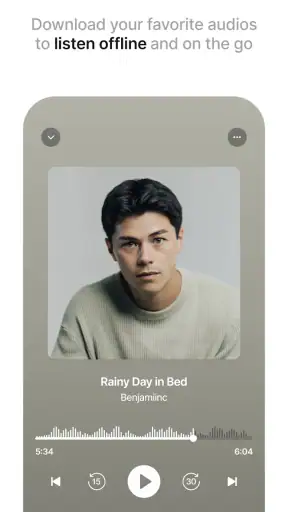
Quinn’s biggest strength is that it gives entertainment a different physical shape. I can listen while my hands are occupied, without the bright screen and visual commitment of a video platform. That makes it useful for evening wind-downs, repetitive chores, or a quiet personal routine. The combination of stories and guided sessions also gives the app more range than a service built around only one type of recording.
I find the guided-session format particularly useful when I want structure rather than endless browsing. A regular video or music service may offer plenty of choice but still leave me deciding what to play. Quinn feels more purposeful when I already know I want an audio-led experience and do not want to spend the first part of the evening comparing thumbnails. This is a subtle advantage: the app is not necessarily better because it has more material, but because its format can reduce the effort of choosing how to spend a short period of time.
The app is also a good match for listeners who dislike being tied to a display. Someone who gets tired of scrolling, or who wants to put the phone down after pressing play, may find the experience more comfortable than a conventional entertainment app. I would recommend it to a friend who wants something intimate and low-screen, provided that friend is an adult and is comfortable managing privacy around other people.
Its popularity is encouraging, but I would not use the 4.7 average as a substitute for personal fit. People who enjoy spoken entertainment and guided formats are likely to respond more positively than people who want music, visual storytelling, live interaction, or a large social layer. The app’s success does not remove that distinction. It simply tells me that the core idea has found a substantial audience.
Where Quinn may not be the right choice
I would skip Quinn if my main goal were a shared family activity for mixed ages. The mature rating makes that a poor match, even if the household likes listening together. I would also choose a broader audio platform if I wanted a general-purpose library spanning many unrelated genres, or if I needed an experience designed around multiple household profiles. Quinn is more focused, and that focus is valuable only when it lines up with what I actually want to hear.
It may also disappoint people who expect audio to behave like passive background music. Stories require attention, and guided sessions can lose their effect when interrupted. If my routine involves constant calls, childcare, traffic awareness, or frequent conversations, I would use Quinn only during a genuinely quiet window. The app can accompany a task, but it should not be treated as a replacement for attention when the task carries responsibility.
The free price makes trying it less intimidating, but the in-app purchase range means I would be cautious on a shared device. I would never let a child or a guest browse with unrestricted purchase access. Even for adults, I would decide in advance whether Quinn is staying within its free offering or whether paid items are part of the plan. That is a practical trade-off rather than a criticism of the content itself: the app is free to start, but a household should still manage spending deliberately.
Finally, people using very old devices should keep expectations realistic. The minimum operating-system requirement is Android 7.0, so compatibility is fairly broad, but an older compatible phone may not be the most pleasant listening device. Battery condition, speaker quality, and the habit of switching between users can matter more than the app’s basic ability to run. I would test it during the exact routine I intend to use, not just open it once and assume the setup is finished.
My household verdict after weighing convenience and boundaries
Quinn - Audio Stories is a strong choice for an adult who wants spoken entertainment or guided listening without committing to a screen. I like it most as a personal app used in a predictable, private routine. It can work on a shared household device, but only when the adults using it agree on headphones, session ownership, purchase boundaries, and age-appropriate access. Those arrangements are not optional details; they determine whether the app feels relaxing or creates avoidable friction.
The developer, QUINN INC., has kept the idea clear enough that I can understand its appeal quickly: press into an audio-centered experience rather than opening another visual feed. The current version, 4.3.2, is available at no upfront cost, with optional paid items inside. I would start with the free experience, use it privately for a few days, and then decide whether it genuinely fits my routine before spending anything.
My recommendation is strongest for adults living alone, couples who respect each other’s listening space, and households with a clearly separated adult device. I would be more cautious for homes where children regularly borrow the same phone or tablet, where speakers are always on, or where nobody wants to manage individual boundaries. In those cases, a general family-friendly audio option is likely the better choice.
Overall, I see Quinn as a focused entertainment app rather than an all-purpose household media hub. Its best quality is the way it turns a small quiet moment into an intentional listening session. Its main weakness is that the same personal, mature nature that makes it appealing also limits casual sharing. If you are an adult looking for private audio stories and guided sessions, I think it is worth trying. If you need a universally suitable app for everyone in the home, I would look elsewhere.


